






What Is a Neutral Wire — And Do You Need It to Install a Smart Switch?
You’ve found the smart switch you want. It looks beautiful, fits your interior, does everything you need. Then you read the installation notes and spot three words that send you to Google: ‘requires a neutral wire.’ Suddenly you’re not sure whether your home even has one — or what it actually does. You’re not alone. This is one of the most-searched questions among Thai homeowners planning a smart home upgrade. Here’s everything you need to know, explained simply.
What Exactly Is a Neutral Wire?
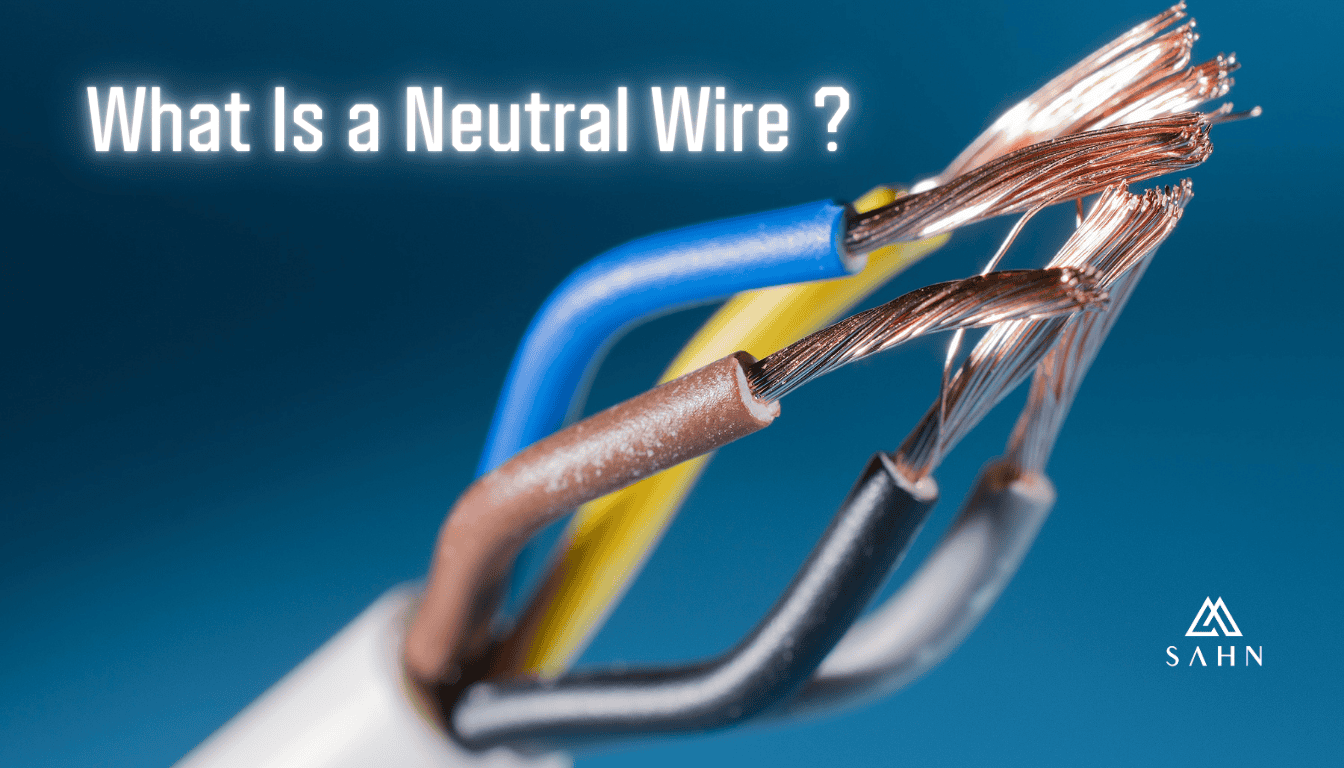
In a standard home electrical system, every circuit needs two paths for electricity to flow: one to deliver power, and one to return it. The wire that delivers power is called the Live wire (or Hot wire). The wire that completes the return path is the Neutral wire.
In a conventional light switch, only the Live wire runs through the switch box. That’s all a mechanical switch needs
it simply breaks or completes the circuit to turn the light on or off. No power is needed to operate the switch itself. A smart switch is different. It has a tiny computer inside (a chip) that needs to stay powered 24 hours a day, even when the light is off. To do that, it needs a constant electricity supply through both the Live and the Neutral wire. Think of it this way: a normal switch is a door that opens and closes. A smart switch is a door with a brain — and that brain needs to stay powered all the time.
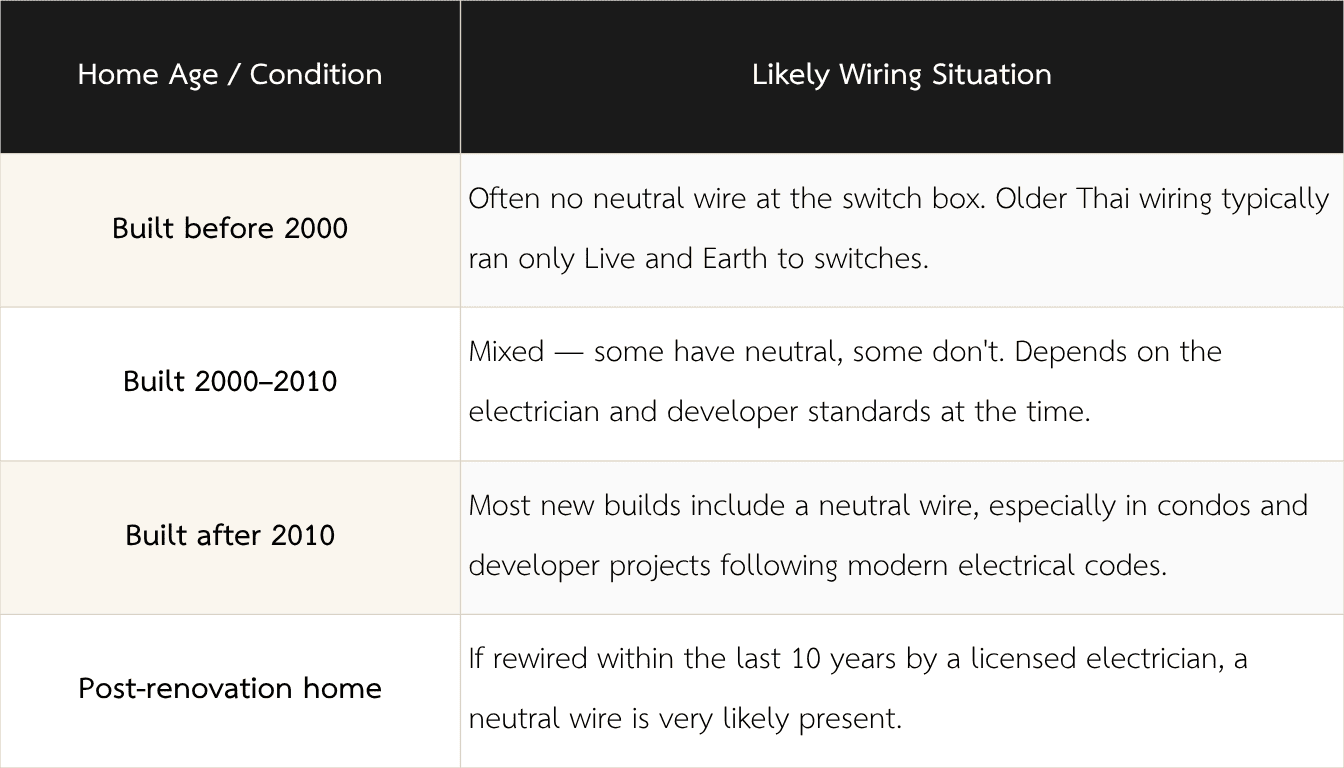
Do Thai Homes Have a Neutral Wire at the Switch Box?
This is where it gets important for homeowners in Thailand. The answer depends almost entirely on when your home was built or last rewired.
How Do You Check If You Have a Neutral Wire?
The safest way is to ask a licensed electrician. But there are two practical clues you can look for yourself
1. Open the switch box carefully (power OFF first). If you see three wires per one circuit — you should be good, normally the natural wire is in blue (but not every case). If you only see two, there’s likely no neutral at the switch point.
2. Check the conduit at the junction box near the ceiling above the switch. If the wire bundle running to the switch contains three or more conductors, a neutral is probably there.
If you’re unsure, always consult an electrician before purchasing. Guessing and getting it wrong means a broken smart switch — or more costly, rewiring.
What Are Your Options If You Don’t Have a Neutral Wire?
You have three realistic paths forward
Option 1 — Pull a neutral wire during renovation. If you’re already renovating, this is the ideal moment. Before walls and ceilings close, ask your electrician to run Live + Neutral cable to every switch point you plan to make smart. The cost is low at renovation stage; it’s expensive after.
Option 2 — Choose a no-neutral smart switch. Some smart switch models are designed to work without a neutral wire. They draw a tiny trickle of current through the light circuit to power the electronics. The tradeoff: they’re not compatible with all bulb types (especially low-wattage LEDs), and may cause slight flickering.
Option 3 — Start with smart bulbs instead. Smart LED bulbs don’t require any wiring changes (normally the bulbs has live and natural wires anyway). They go into your existing fixtures and connect via Wi-Fi or Zigbee. It’s not the same experience as a smart switch, but it gets you started.
Planning a Smart Home with SAHN? Start Here.
SAHN’s smart switch range — part of the premium Dale and Ellis series — is designed for modern Thai homes where neutral wiring is available. The SAHN smart switches integrate seamlessly into the same sleek frameless aesthetic as the rest of the SAHN collection, meaning your smart switches and standard switches look identical on the wall. If you’re in the planning or renovation phase, the SAHN team can advise on wiring requirements and help you map out which points need smart switches and which don’t. Getting this right at design stage means zero compromise on the final result — both in how your home works and how it looks.
Frequently Asked Questions
Q: Does a smart switch always require a neutral wire?
A: Most smart switches require a neutral wire to stay powered when the light is off. Some models are designed to work without one, but they have compatibility limitations with certain LED bulb types.
Q: How do I know if my home has a neutral wire at the switch?
A: Open the switch box (with power off) and count the wires. If you see three — usually blue (neutral), it seems you have a neutral. If only two, you likely don’t. Always confirm with a licensed electrician.
Q: Can I install a smart switch in an older Thai home without rewiring?
A: Yes, if you choose a no-neutral smart switch model. However, these have limitations. The best long-term solution is to run a neutral wire during any renovation, which makes any smart switch compatible.
Q: When is the best time to add a neutral wire for smart switches?
A: During renovation, before walls and ceilings are closed. At that stage, an electrician can add a neutral wire cheaply. After walls are sealed, it becomes significantly more expensive and disruptive.
Q: Do SAHN smart switches require a neutral wire?
A: SAHN smart switches are designed for modern wiring with a neutral wire. If you’re planning a renovation or building new, ensure your electrician runs a neutral to all smart switch points. Contact the SAHN team at sahndesign.com for specific wiring guidance.
Plan your smart home with SAHN — visit sahndesign.com or speak with our design consultants for personalised wiring advice.


