






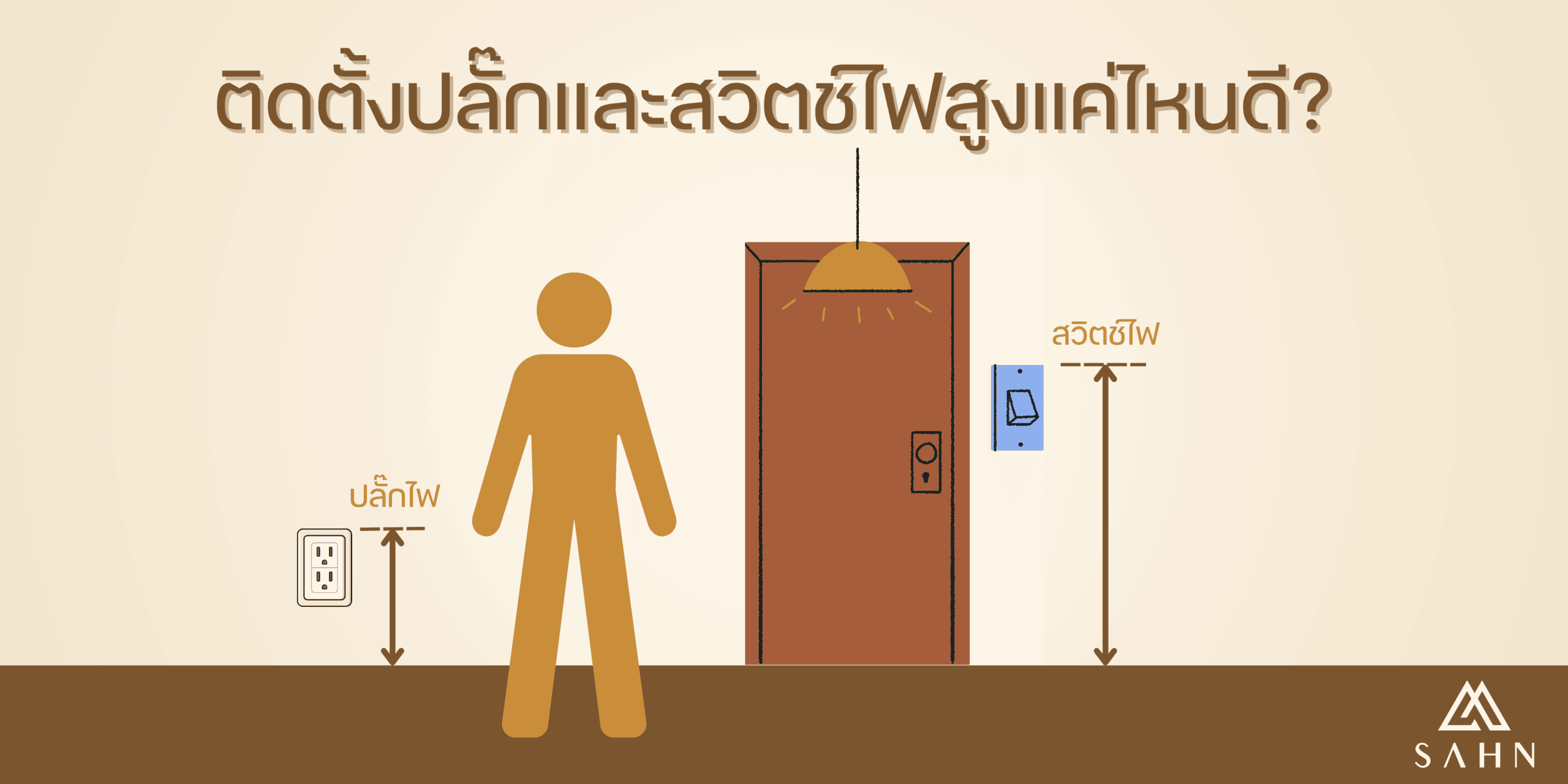
Ideal Height for Installing Electrical Outlets and Light Switches
A Complete Guide to Standard Installation Heights You Should Know Before Building or Renovating Your Home
When building or renovating a house, one detail that often gets overlooked is the installation height of electrical outlets and light switches. While it may seem minor, incorrect placement can affect daily convenience, safety, and the overall look of your interior.
Let’s explore standard outlet and switch heights based on Thai and international guidelines (like IEC and TISI), to help you plan your layout the smart way.
Standard Heights You Should Know
- Electrical Outlets (Socket Outlets)
- General wall outlets (near the floor)
Install at 30 cm from the floor. This ensures both safety and ease of use. Installing them too high might make it difficult to plug in floor-level appliances (such as vacuum cleaners or floor lamps). Too low height of installation could be unsafe in flood-prone areas. - Bedside outlets
Install at 60–85 cm from the floor, depending on bed and nightstand height. This makes it convenient to plug in devices like phone chargers or bedside lamps. - Outlets above desks, vanities, or kitchen counters
Install at 110 cm to keep cords clear of working surfaces and prevent clutter. - Outlets for wall-mounted TVs or tall appliances
Position between 100–180 cm, depending on furniture layout and the height of the mounted device.
- Light Switches:
- Standard switches (room and home entry points)
Install at 100–135 cm from the floor, which is the natural reach height for most adults. This placement avoids furniture obstruction and aligns with ergonomic use. - Children’s rooms or elderly-friendly areas
Consider a lower height of around 80 cm to allow easier access. - Switches next to beds or sofas (e.g. for floor lamps)
Place at 60–85 cm for comfortable use while sitting or lying down.
Why Installation Height Matters
- Enhanced safety
Keeping outlets off the floor reduces the risk of contact with water or moisture—especially crucial in bathrooms and kitchens. - Better convenience
Appropriately placed switches and sockets reduce the need for bending or stretching, making your daily routine smoother. - Cleaner interior aesthetics
Proper positioning ensures that switches and sockets blend seamlessly with furniture lines and don’t disrupt the visual flow of the room.
SAHN’s Expert Tips
- Match the design with the mounting position
For example, horizontal minimalist sockets work well under desks, while vertical switches suit central columns or entryways. - Consider users of all ages
Plan outlet and switch placement with both children and seniors in mind for maximum usability and safety. - Consult with your electrician or designer early
Early planning ensures that switches and sockets don’t interfere with furniture like beds, shelves, or wardrobes. - Use waterproof covers where needed
For outlets near water-prone areas (bathroom counters or toilets), choose sockets with waterproof covers (IP-rated). SAHN offers a wide range of stylish and functional waterproof covers in various colors and protection levels—feel free to contact our team for recommendations.
Proper outlet and switch installation height isn’t just about functionality—it elevates your home’s safety, usability, and visual appeal. That’s why SAHN designs sockets and switches that support multiple height levels—perfect for homes, residential projects, hotels, and modern living spaces.


